The Lectures
Launched in 2026, the William Bruce Lectures are a continuation of a lecture series first held in New York City in 1906 by sympathizers of the Scottish New Church minister William Bruce (1799-1882).
Today, our annual public lectures are scholarly, privately funded, non-denominational, and open to all. Our vision is that in an increasingly fragmented intellectual landscape, our lectures should serve as a regular forum in New York where academics and members of the public can meet.
Who was William Bruce
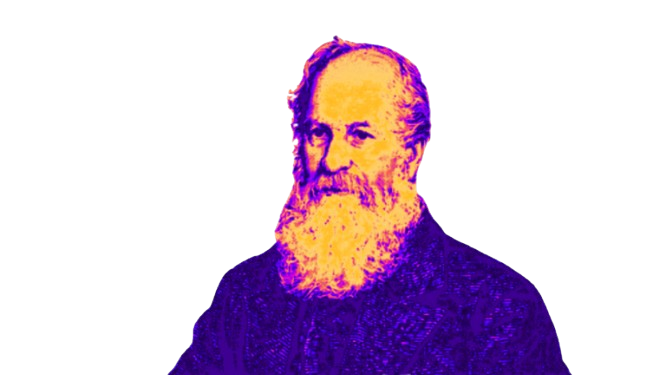
William Bruce (1799-1882) was a Scottish minister of the New Jerusalem Church in Edinburgh and one of the more prolific theological writers within the British New Church movement of the nineteenth century.
Bruce’s works addressed social and spiritual issues. His publications include Marriage: Its Origin, Uses, and Duties (1850), Commentary on the Gospel According to St. Matthew (1868), Commentary on the Revelation of St. John (1877), and The First Three Kings of Israel (1879). These volumes, collectively known as his "New Church Commentaries," applied the doctrines of the Swedish philosopher Emanuel Swedenborg (1688-1772) to interpret biblical scripture. Bruce's long career, which spanned most of the nineteenth century, made him an important figure in the growth of Swedenborgianism in Scotland, where the New Jerusalem Church remained a small but intellectually engaged community.
In the United States, some notable figures influenced by the Swedenborgian tradition include, to name a few, Ralph Waldo Emerson, Johnny Appleseed, Daniel Burnham, and Helen Keller. In 1906, a series of lectures were held in William Bruce’s honor by New Church sympathizers in New York City.
A hundred and twenty years later, the new William Bruce Lectures pay homage to this legacy, building on its distinctive Swedenborgian heritage while also expanding it in a broader spirit of intellectual non-conformism.